
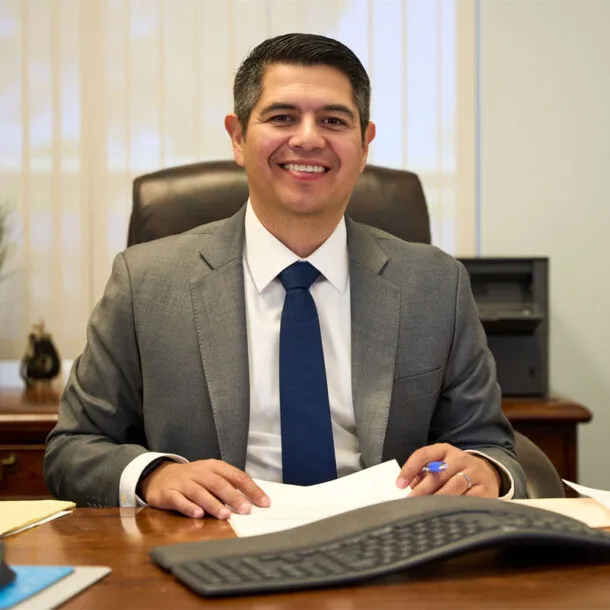
Founder · Super Lawyer 5×
Lawrence M. Ruiz, Esq.
Founder · Managing Attorney
Super Lawyer · Founder · Henderson PI
Nevada motorcycle accident lawyers fighting rider bias statewide. Hablamos Español. Free consult, no fee unless we win. Henderson, Las Vegas, Summerlin.
150+ verified 5-star reviews · $30M+ recovered for injured clients
No attorney fee unless we recover money · Bilingual EN / ES · Past results do not guarantee future outcomes.
Legally reviewed by David J. Dzarnoski, Esq. — Junior Partner · Pre-litigation · Reviewed 2026-06-12
Attorney advertising. This information is not legal advice. No attorney fee unless we recover money for you; clients may be responsible for costs and opposing parties' fees as required by law. Past results do not guarantee future outcomes.
In short: Nevada motorcycle riders often face insurer bias after a crash. The Ruiz Law Firm handles rider injury claims in Henderson, Las Vegas, and Summerlin, in English or Spanish.
The Ruiz Law Firm represents injured riders from its Henderson office, serving Henderson, Las Vegas, Summerlin, and the whole Las Vegas Valley. Riding in the city? Our Las Vegas motorcycle accident lawyer page covers Las Vegas crash corridors and local claims in detail.
Motorcycle accident claims require careful handling because riders often face blame before anyone studies the facts. A driver may say the motorcycle was speeding, came out of nowhere, or should have been easier to see.
Those claims need to be tested against the evidence rather than accepted at face value, including:
If the crash involved a passenger vehicle, the Henderson car accident page and Las Vegas car accident page may also help. If you were hurt on a bicycle rather than a motorcycle, our Las Vegas bicycle accident attorney page covers the different rules and insurance issues riders on two wheels face.
You likely have a case if another driver's negligence caused your crash and you were injured, even if the insurer is already trying to blame you for the way you were riding.
Nevada is an at-fault state, so the at-fault driver and their insurer are generally responsible for your damages. You usually have two years from the date of the crash to file a claim under NRS 11.190(4)(e).
The Ruiz Law Firm reviews motorcycle cases for free and works on a contingency fee, so there is no attorney fee unless we recover money for you. The fastest way to know where you stand is to contact our Las Vegas motorcycle accident team for a free case review.
Many of the riders we help are hurt on Henderson roads, not just in Las Vegas. A Henderson motorcycle accident often happens where fast-moving regional traffic meets the city's commercial and residential streets:
Surface arterials like Stephanie Street and Eastern Avenue add their own risks. Constant left turns into shopping centers, restaurants, and driveways give a turning driver the chance to cut directly across a rider's path.
The fault patterns track the geography. On the I-215 Beltway and the US-95/I-11 interchange, unsafe lane changes and merges put riders in a driver's blind spot at highway speed.
On Boulder Highway, Stephanie Street, and Eastern Avenue, the left-turn collision is the classic threat: a driver judges the gap wrong, claims the motorcycle "came out of nowhere," and the rider is blamed for being hard to see.
That rider-bias assumption is exactly what a Henderson motorcycle accident claim has to overcome. We test it against signal timing, sightlines, lane position, the physical damage to both vehicles, and any business, traffic, or doorbell-camera footage near the intersection. In Henderson, as everywhere in Nevada, fault should turn on whose driving caused the crash, not on the fact that the injured person was on two wheels.
The Ruiz Law Firm reviews Henderson motorcycle crashes on the same free, contingency-fee basis as the rest of our motorcycle work.
Motorcycle crashes in Southern Nevada often involve:
Small details can matter. A scrape mark, helmet damage, roadway photo, or nearby camera can change how fault is evaluated.
Injured riders often have to fight two cases at once: the actual injury claim and the assumption that the rider caused it. Insurance companies may focus on helmet use, speed, gear, lane position, or the type of motorcycle instead of the driver's unsafe turn, merge, or failure to yield.
Helmet and gear questions do not automatically decide fault. They need to be analyzed against the injury, the medical evidence, and the mechanics of the crash.
Nevada requires the operator and any passenger of a motorcycle to wear a U.S. Department of Transportation-approved helmet on public roadways under NRS 486.231. The law also covers basic eye protection when a motorcycle is not equipped with a windscreen.
Wearing or not wearing a helmet does not, by itself, decide who was at fault for a crash. Fault turns on whose driving caused the collision — the left turn, the unsafe lane change, the failure to yield — not on a rider's gear.
When an insurer raises helmet use, it is usually making a damages or comparative-fault argument: that some specific injury would have been less severe. That argument is not automatic. It has to be tested against the medical records, the impact and scrape evidence, and the actual mechanics of the collision before it changes what a claim is worth.
Motorcycle injuries can exceed a minimum auto policy quickly. A rider may need emergency care, surgery, orthopedic treatment, neurological follow-up, skin grafts, physical therapy, and time away from work.
We review every policy that may apply, including:
The liability policy on the at-fault driver is only the starting point. When that policy is too small to cover serious injuries — or when a hit-and-run driver is never identified — uninsured and underinsured motorist coverage can become the difference between a partial recovery and a full one.
That coverage is not limited to the policy on the motorcycle itself. A rider may be covered under a spouse's or household member's auto policy, an umbrella policy, or a commercial policy, and more than one policy can sometimes apply to the same crash.
Insurers do not always volunteer this. Part of building the claim is identifying every layer of coverage before anyone agrees to settle, because once a release is signed, the door to those other policies usually closes for good.
Because a rider has little physical protection, motorcycle injuries are often more serious than the injuries from a comparable car crash. The claim should account for future treatment and long-term limitations, not only the first emergency-room visit.
Burns, shoulder and knee injuries, chronic pain, and lost earning capacity are also common after a motorcycle crash.
The motorcycle, helmet, riding jacket, gloves, boots, damaged phone, photos, and medical paperwork can all become evidence. Do not repair or discard the motorcycle until the damage has been documented.
If the crash happened near a business, hotel, apartment complex, intersection, construction zone, or rideshare pickup area, video may exist for only a short period.
Useful records can include:
Insurers often lean on rider-bias talking points. Each one can be tested against physical and documentary evidence rather than accepted at face value.
| Insurer argument | Evidence that tests it |
|---|---|
| "The rider came out of nowhere." | Traffic-signal timing, sightline analysis, and witness or camera footage showing the rider's position and visibility. |
| "The rider was speeding." | Event data recorder (EDR) and speed data, skid and scrape marks, and the physical damage to both vehicles. |
| "The rider wasn't wearing a helmet." | Medical records and injury mechanism tied to the specific injury, not to fault for the collision itself. |
| "The rider was in the wrong lane position." | Roadway markings, lane-width measurements, debris fields, and impact points that show where the crash actually happened. |
| "The injuries aren't that serious." | Imaging, treatment records, surgical reports, and medical causation opinions connecting the crash to the harm. |
Some motorcycle crashes involve delivery drivers, rideshare drivers, shuttle drivers, taxis, security vehicles, or commercial vans. Those facts can change the insurance analysis.
A personal auto insurer may deny coverage if the driver was working, while a commercial or platform policy may apply. We review the driver's status and all available policies before accepting an insurer's coverage position.
There is no fixed dollar value for a motorcycle case. The value depends on the specific injuries, the treatment, the fault evidence, and the insurance coverage that is actually available. A complete claim is usually built from these categories:
We do not put a number on a case before reviewing the facts, and we do not promise a result. We review everything in a free consultation first.
Being blamed in part for a crash does not automatically end a motorcycle claim. Nevada follows modified comparative negligence under NRS 41.141: a rider who is 50 percent or less at fault can still recover, with the recovery reduced by the rider's percentage of fault. A rider found 51 percent or more at fault is barred from recovering.
Because insurers often try to push more blame onto riders, it matters that fault is measured against the evidence rather than the insurer's assumptions.
Phoenix, Arizona motorcycle crashes are served from our Tempe office — see our Phoenix motorcycle accident lawyer page. Arizona statutes apply there, not Nevada law.
Call (725) 485-3301 or request a free consultation. We meet with riders at our Henderson office at 1055 Whitney Ranch Drive, Suite 110, and there is no attorney fee unless we recover money for you.
If you are still comparing firms, see why riders choose the best Las Vegas injury attorney for serious motorcycle claims.
Related motorcycle accident guides:
Car, truck, slip-and-fall, dog bite, and workplace injury cases across Henderson, Las Vegas, and surrounding areas. Past results do not guarantee future outcomes.
Free Consultation →Missed work, medical bills, your family. We carry the legal weight so you can focus on recovering.
Super Lawyer · Founder · Henderson PI
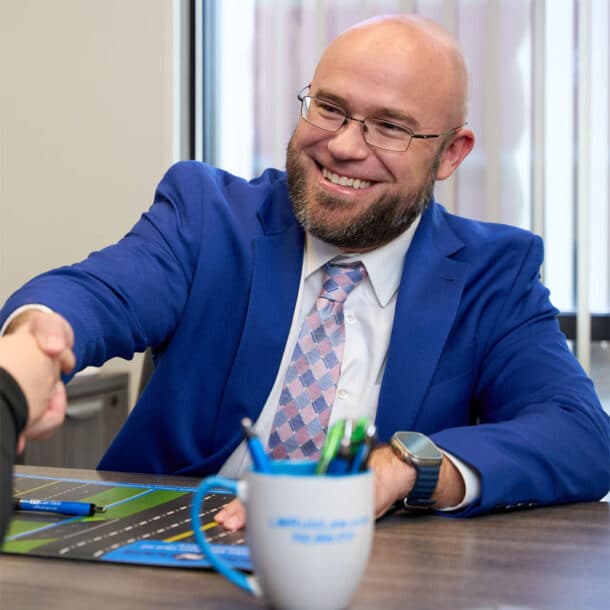
$1M+ pre-suit settlements · Lifelong Nevadan

Workers' comp lead · 14+ years in Nevada
Trusted by our clients.
“After my accident I didn't know how I was going to pay my bills. Ruiz Law helped me understand the process from the start.”
“Lawrence made me feel like I really mattered. I didn't expect that from a lawyer — and it makes a huge difference.”
“Lawrence took my truck-accident case seriously from day one. Words can't express how thankful I am.”
+3 more verified reviews
Every case is different. Prior results and testimonials do not guarantee, predict, or warrant a similar outcome.
Call the 24-hour intake line or request a case review online anytime. No legal jargon — just the facts, in English or Spanish.
A Ruiz attorney — not a screener — aims to review new injury matters promptly and explain your next steps.
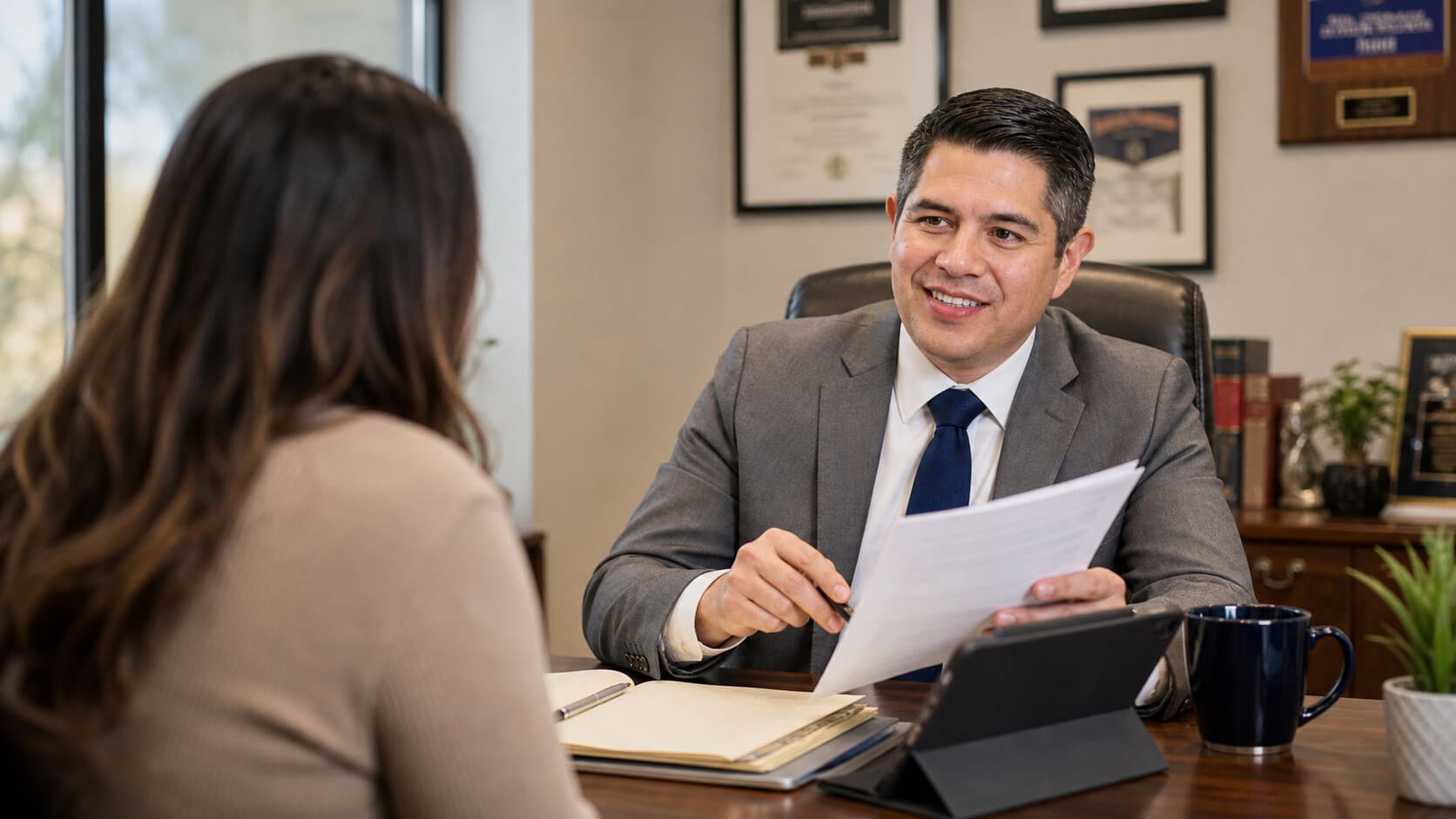
On that call we discuss whether the firm may be able to help, what factors affect value, and whether a lawyer is likely needed.
In-House Languages
Consulta gratis. No paga honorarios de abogado a menos que recuperemos dinero.
Nevada's statute of limitations for personal injury is generally two years from the date of the crash under NRS 11.190(4)(e). Evidence can disappear much sooner, including dashcam video, roadway conditions, witness memories, and vehicle damage.
Nevada follows modified comparative negligence. If you are 50 percent or less at fault, you may still recover, but your recovery can be reduced by your percentage of fault. Insurers often try to blame riders, so the claim should be built from evidence rather than assumptions.
Uninsured or underinsured motorist coverage may become important when the at-fault driver has no insurance or not enough insurance. We review your motorcycle policy, household coverage, commercial coverage, and any other available policy.
A claim may include medical bills, future care, lost income, reduced earning capacity, motorcycle repair or replacement, pain, scarring, disfigurement, and the long-term effect of the injury on daily life.
Call 911, get medical care, photograph the scene and motorcycle if you can, save your helmet and riding gear, get witness information, and avoid recorded statements until you understand your rights.
Yes. Nevada requires operators and passengers of motorcycles to wear a U.S. Department of Transportation-approved helmet on public roadways under NRS 486.231. Helmet use is a safety requirement, but whether a rider wore a helmet does not by itself decide who caused a crash. An insurer may raise helmet use to argue about the injuries, and that argument has to be tested against the medical records, impact evidence, and the mechanics of the collision.
Yes. Nevada is an at-fault (fault-based) state, so the driver who caused the crash and their insurer are generally responsible for the rider's damages. Nevada also follows modified comparative negligence: a rider who is 50 percent or less at fault can still recover, though the recovery is reduced by the rider's percentage of fault, and a rider found 51 percent or more at fault is barred from recovering under NRS 41.141.
There is no fixed value. A Henderson or Las Vegas motorcycle claim is built from the specific injuries, treatment and future care, lost income and reduced earning capacity, motorcycle repair or replacement, and non-economic harm such as pain, scarring, and disfigurement, along with the available insurance coverage and any fault dispute. Because motorcycle injuries are often severe, the claim should account for long-term limitations rather than only the first emergency-room visit. We review the facts in a free consultation before discussing value.
Often, yes. Not wearing a helmet does not automatically end a claim. An insurer may use helmet use to argue that some injuries were worse than they should have been, so the claim should be built on evidence — police reports, camera footage, impact marks, and medical causation — rather than the insurer's assumptions. Nevada's comparative-fault rule under NRS 41.141 also allows recovery as long as the rider is 50 percent or less at fault, with the recovery reduced by that percentage.
Call (725) 485-3301 — no pressure for the first 10 minutes.
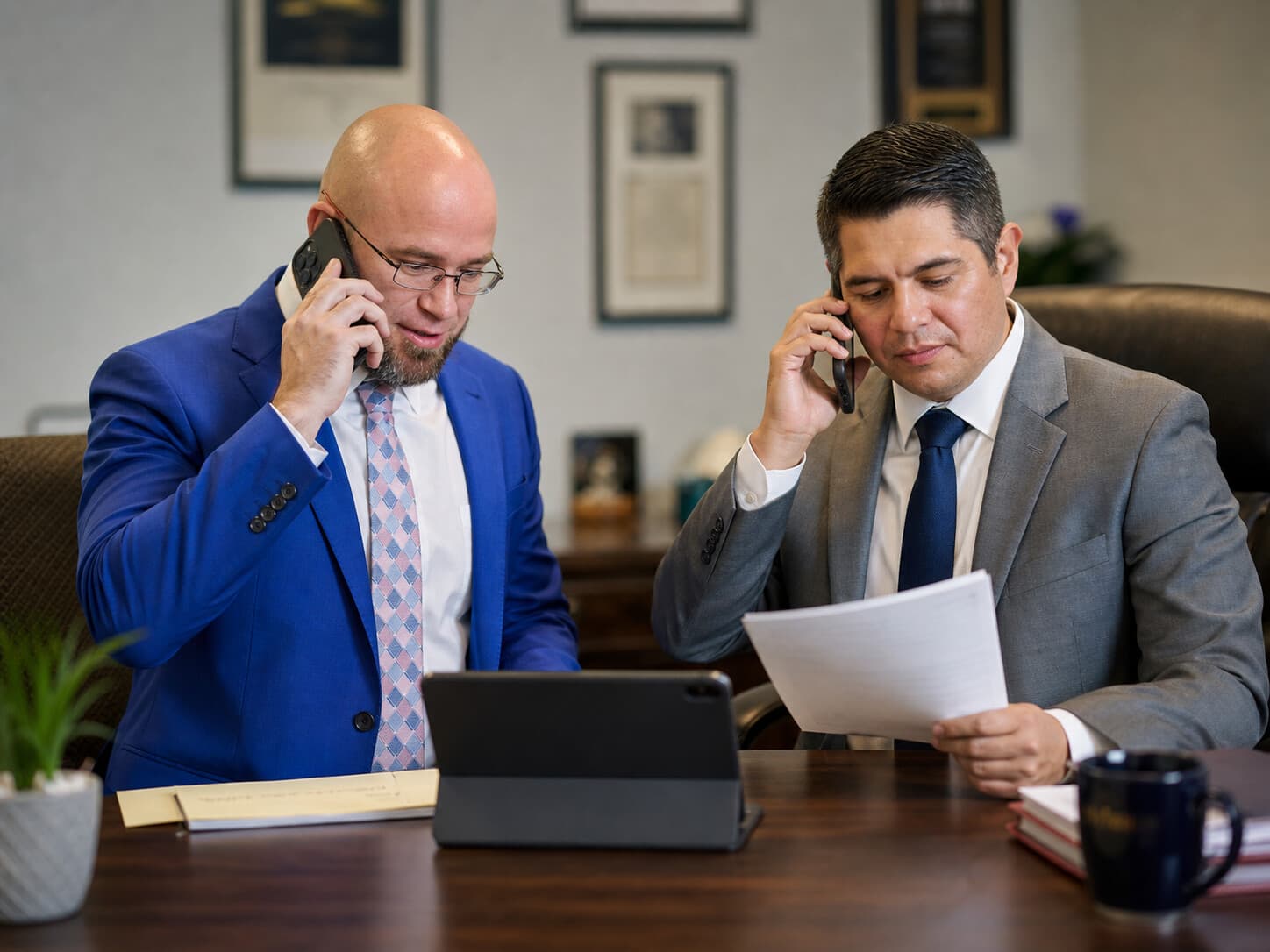
Free consultation. No hourly fees. No upfront attorney fee. No attorney fee unless we recover money for you.
Personal injury help in Henderson, Las Vegas, and surrounding areas.