
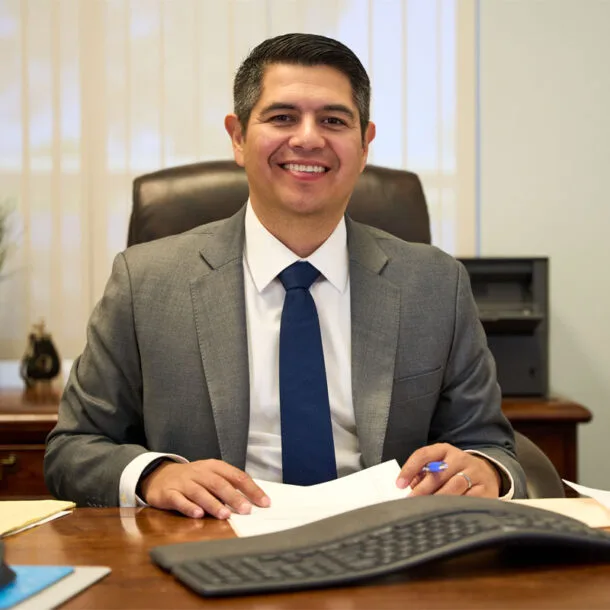
Founder · Super Lawyer 5×
Lawrence M. Ruiz, Esq.
Founder · Managing Attorney
Super Lawyer · Founder · Henderson PI
Injured in a slip and fall in Las Vegas or Henderson? Our slip and fall lawyers hold negligent casino, hotel, and store owners accountable for unsafe conditions. Free consult — no fee unless we win.
150+ verified 5-star reviews · $30M+ recovered for injured clients
No attorney fee unless we recover money · Bilingual EN / ES · Past results do not guarantee future outcomes.
Legally reviewed by David J. Dzarnoski, Esq. — Junior Partner · Pre-litigation · Reviewed 2026-06-12
Attorney advertising. This information is not legal advice. No attorney fee unless we recover money for you; clients may be responsible for costs and opposing parties' fees as required by law. Past results do not guarantee future outcomes.
In short: Injured in a slip and fall in Las Vegas or Henderson? Our slip and fall lawyers hold negligent casino, hotel, and store owners accountable for unsafe conditions. Free consult — no fee unless we win. The Ruiz Law Firm offers a free consultation in English or Spanish — no attorney fee unless we recover money for you. Call (725) 485-3301 or request a free consultation.
Hurt in a fall on someone else's property in Las Vegas or Henderson? Call (725) 485-3301 for a free case review — no attorney fee unless we recover money for you. Or Get My Free Case Review online.
Slip and fall injuries may be very common, but they still have the potential to be serious. Whether you have slipped on a wet floor at a casino, tripped on a broken sidewalk, or caught your foot on a torn carpet in a hotel hallway, you could have a premises-liability claim against the property owner or manager.
In Nevada, property owners — including stores, restaurants, hotels, casinos, apartment complexes, and private landowners — owe a duty of reasonable care to people who are lawfully on their property. When they fail to inspect for hazards, fix known problems, or warn visitors of dangerous conditions, they can be held legally responsible for the injuries that result.
Winning a premises-liability claim is not about showing that you fell and got hurt. It is about proving the property owner's negligence with four specific elements:
Each element matters. The mere existence of a hazard is not enough — you have to connect the owner's failure to the fall and the fall to your injuries. That is where evidence and an experienced fall-injury attorney make the difference.
In Nevada, property owners owe a general duty of reasonable care to keep their premises reasonably safe for lawful visitors. A visitor's status still shapes how that duty plays out, and business invitees are owed the most active protection:
Most Las Vegas slip-and-fall victims — shoppers, diners, hotel and casino guests — are invitees, which is why owners owe them the most active duty to find and fix hazards.
Premises-liability claims usually turn on notice: did the owner know, or should they have known, about the hazard? Nevada recognizes two ways to establish it.
| Type of notice | What it means | | --- | --- | | Actual notice | The owner or their staff actually knew about the hazard — a spill was reported, or an employee saw it and walked past. | | Constructive notice | The hazard existed long enough that a reasonable owner conducting proper inspections should have discovered and fixed it. |
You generally only need to prove one. The longer a spill or a broken step went unaddressed, the easier it is to prove constructive notice — which is exactly why maintenance logs, inspection schedules, and timestamped video matter so much to a fall claim.
The proof that wins a premises-liability case starts vanishing almost immediately. The most time-sensitive evidence includes:
Don't wait while the video gets overwritten. Call (725) 485-3301 for a free consultation. We work on contingency — no attorney fee unless we recover money — and the sooner we are involved, the more evidence we can preserve before it is gone.
Hazardous conditions that lead to these claims include:
Around the Las Vegas valley, the setting often shapes the case. We see falls on Strip casino floors and hotel lobbies, in Summerlin shopping centers like Downtown Summerlin, at Henderson grocery and big-box stores, and in apartment-complex stairwells and parking garages across Clark County. These are high-traffic environments that see thousands of visitors a day, and they carry a clear duty to inspect and maintain their premises regularly. When a hazardous condition sits unaddressed for an unreasonable amount of time, that delay is often what establishes the notice element of your claim.
Premises-liability law applies to a wide range of locations:
| Issue | What Nevada law provides | | --- | --- | | Filing deadline | 2 years from the date of injury (NRS 11.190(4)(e)) | | Fault rule | Modified comparative negligence, 51% bar (NRS 41.141) — barred if more than 50% at fault | | What you must prove | Duty, breach (notice), causation, and damages | | Most visitors' status | Invitee — owed the highest duty of care | | Attorney fee | Contingency — no fee unless we recover money for you |
Because Nevada uses a modified comparative-negligence system with a 51% bar (NRS 41.141), insurers in fall cases lean hard on two defenses: that you "weren't watching where you were going," and that the hazard was "open and obvious." Both arguments are aimed at the same goal — pushing your share of fault higher. Your recovery is reduced by your percentage of responsibility, and it is eliminated entirely if you are found more than 50% at fault. That is why rebutting an inflated fault assignment with evidence is central to protecting what your claim is worth.
Proving a fall claim is not as straightforward as it might seem. The property owner's insurance company will investigate quickly, often before you have had the chance to gather evidence. Adjusters may argue that the hazard existed for only a moment, that warning signs were posted, or that you were not watching where you were going. The insurer has every incentive to inflate your percentage of fault to reduce or eliminate your payout.
An attorney can help by securing surveillance footage before it is overwritten, obtaining incident reports and maintenance records, consulting with experts on industry safety standards, and negotiating with the insurer on your behalf. Acting fast matters: video footage is typically overwritten within days, and witnesses' memories fade.
If your claim is successful, you may be able to recover compensation for:
Fall injuries can be far more serious than they first appear. Fractures — particularly hip fractures in older victims — traumatic brain injuries from striking the ground, spinal cord injuries, and torn ligaments all require extensive treatment. Do not assume your injuries are minor until a doctor has fully evaluated you.
Nevada's personal-injury statute of limitations is generally two years from the date of injury (NRS 11.190(4)(e)). Waiting to consult an attorney puts your case at risk. Evidence disappears, witnesses become harder to locate, and property owners have time to repair the very hazard that hurt you — making it harder to prove what conditions existed on the day you fell.
If you are comparing local pages or researching the injuries most common in serious falls, these resources may help:
To speak with a slip and fall attorney serving Henderson, Las Vegas, and Summerlin, contact The Ruiz Law Firm by calling (725) 485-3301. We work on contingency — no attorney fee unless we recover money. You can also schedule a free consultation by filling out our online form, and a member of our team will be happy to discuss your case with you.
Car, truck, slip-and-fall, dog bite, and workplace injury cases across Henderson, Las Vegas, and surrounding areas. Past results do not guarantee future outcomes.
Free Consultation →Missed work, medical bills, your family. We carry the legal weight so you can focus on recovering.
Super Lawyer · Founder · Henderson PI

$1M+ pre-suit settlements · Lifelong Nevadan

$29.5M trial team · 25+ years

Workers' comp lead · 14+ years in Nevada
Trusted by our clients.
“After my accident I didn't know how I was going to pay my bills. Ruiz Law helped me understand the process from the start.”
“Lawrence made me feel like I really mattered. I didn't expect that from a lawyer — and it makes a huge difference.”
“Lawrence took my truck-accident case seriously from day one. Words can't express how thankful I am.”
+3 more verified reviews
Every case is different. Prior results and testimonials do not guarantee, predict, or warrant a similar outcome.
Call the 24-hour intake line or request a case review online anytime. No legal jargon — just the facts, in English or Spanish.
A Ruiz attorney — not a screener — aims to review new injury matters promptly and explain your next steps.

On that call we discuss whether the firm may be able to help, what factors affect value, and whether a lawyer is likely needed.
In-House Languages
Consulta gratis. No paga honorarios de abogado a menos que recuperemos dinero.
Nevada’s statute of limitations for personal-injury claims, including slip and fall cases, is generally two years from the date of the injury (NRS 11.190(4)(e)). Missing that deadline almost always means losing your right to recover, so it is important to speak with an attorney as soon as possible after you are hurt.
Nevada follows a modified comparative negligence rule with a 51% bar (NRS 41.141). You can still recover compensation as long as you are no more than 50% responsible for the accident. Your award is reduced by your percentage of fault, so even if you bear some responsibility, you may still have a valid claim.
You generally need to show four things: the property owner owed you a duty of care, they breached it by allowing or failing to fix or warn of a dangerous condition, that condition actually caused your fall and injuries, and you suffered real damages. Evidence such as incident reports, surveillance footage, maintenance logs, and witness statements can be critical to establishing that the owner had notice of the hazard.
Recoverable damages can include medical expenses, future treatment costs, lost wages and lost earning capacity, physical pain and suffering, and emotional distress. The specific value of a claim depends on the facts, the severity of your injuries, and how those injuries affect your daily life and ability to work.
Report the incident to the property owner or manager before you leave, and ask for a written incident report. Photograph the hazard and your injuries, gather contact information from witnesses, seek medical attention right away, and avoid giving a detailed recorded statement to any insurance adjuster before consulting an attorney.
Actual notice means the property owner or their staff actually knew about the hazard — for example, a spill was reported or an employee walked past it. Constructive notice means the dangerous condition existed long enough that a reasonable owner conducting proper inspections should have discovered and corrected it. You generally only need to prove one. The longer a hazard went unaddressed, the easier it usually is to establish constructive notice, which is why maintenance logs, inspection schedules, and timestamped video are so important to a premises-liability claim.
Generally yes. Under Nevada premises-liability principles, customers and guests of businesses such as casinos, hotels, restaurants, and stores are treated as invitees — the class owed the highest duty of care. That means the property owner is expected to actively inspect the premises for hazards and fix or warn about them, not merely react to dangers they happen to notice. Most Las Vegas slip-and-fall victims fall into this category, which strengthens the obligation the property owner owed them.
Quickly. Surveillance and security-camera footage is often overwritten within days, the hazard itself may be cleaned up or repaired soon after your fall, and witnesses become harder to locate as time passes. An attorney can send a preservation letter and request incident reports, sweep and maintenance logs, and the original video before any of it is lost. Acting fast is one of the most important things you can do to protect a premises-liability claim.
Nevada follows modified comparative negligence with a 51% bar (NRS 41.141). You can still recover as long as you were no more than 50% at fault, but your award is reduced by your percentage of responsibility, and you recover nothing if you are found more than 50% at fault. In fall cases, insurers often argue you weren’t watching where you were going or that the hazard was open and obvious in order to push your fault share higher, so rebutting an inflated fault assignment with evidence directly affects what your claim is worth.
Call (725) 485-3301 — no pressure for the first 10 minutes.
Free consultation. No hourly fees. No upfront attorney fee. No attorney fee unless we recover money for you.
Local, bilingual, Clark County. 24-hour intake line and online case-review requests.