
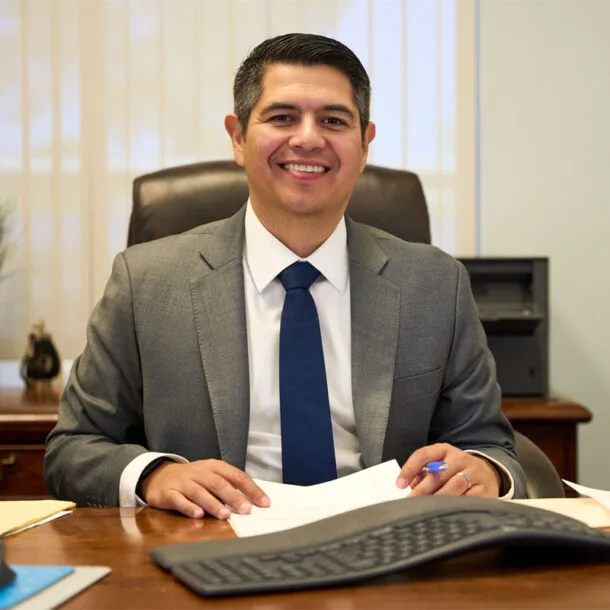
Founder · Super Lawyer 5×
Lawrence M. Ruiz, Esq.
Founder · Managing Attorney
Super Lawyer · Founder · Henderson PI
Henderson & Las Vegas traumatic brain injury lawyers. We prove TBI causation, build life-care plans for future costs, and fight for full compensation. No attorney fee unless we recover money.
150+ verified 5-star reviews · $30M+ recovered for injured clients
No attorney fee unless we recover money · Bilingual EN / ES · Past results do not guarantee future outcomes.
Legally reviewed by David J. Dzarnoski, Esq. — Junior Partner · Pre-litigation · Reviewed 2026-06-12
Attorney advertising. This information is not legal advice. No attorney fee unless we recover money for you; clients may be responsible for costs and opposing parties' fees as required by law. Past results do not guarantee future outcomes.
In short: Henderson & Las Vegas traumatic brain injury lawyers. We prove TBI causation, build life-care plans for future costs, and fight for full compensation. No attorney fee unless we recover money. The Ruiz Law Firm offers a free consultation in English or Spanish — no attorney fee unless we recover money for you. Call (725) 485-3301 or request a free consultation.
A traumatic brain injury (TBI) is a disruption in the normal function of the brain caused by a bump, blow, or jolt to the head, or by a penetrating head injury, according to the U.S. Centers for Disease Control and Prevention (CDC). TBIs send well over a million Americans to emergency departments each year, and the most severe cases can mean permanent disability or death (CDC). The Ruiz Law Firm represents brain injury victims and their families throughout Henderson, Las Vegas, Summerlin, and Clark County, and our attorneys — Lawrence Ruiz, David J. Dzarnoski, and Mikela Babayan Mikhail — assemble the medical experts, life-care planners, and economists a serious TBI claim requires.
Sometimes TBI symptoms appear right after the accident. Other times it can take days or weeks for symptoms to surface — a delay that makes these claims uniquely challenging and is exactly why early documentation matters.
There are different levels of TBIs. Mild TBIs often result in concussions, moderate TBIs can cause loss of consciousness, and severe TBIs can lead to prolonged unconsciousness, coma, or lasting amnesia. The section below explains how doctors actually grade that severity.
A concussion is a mild TBI caused by a bump, blow, or jolt to the head that temporarily disrupts normal brain function. Most people do not lose consciousness, and initial symptoms — headache, fogginess, sensitivity to light — can feel minor enough to dismiss. That is a serious mistake. Repeated concussions and even a single untreated concussion can produce lasting cognitive problems, chronic headaches, depression, and sleep disorders.
Moderate and severe TBIs involve more extensive damage. A moderate TBI typically causes loss of consciousness for minutes to hours and can produce confusion lasting days or weeks. Severe TBIs — caused by high-speed crashes, falls from height, or violent impacts — can mean prolonged unconsciousness, coma, permanent cognitive or physical impairment, and the need for lifelong supervised care. The gap between a "mild" concussion and a severe TBI is enormous, but both deserve serious medical and legal attention.
When you understand how the medical system grades a brain injury, you can better understand why your claim is worth what it is worth. Doctors most often classify TBI severity using the Glasgow Coma Scale (GCS), which scores a patient's eye, verbal, and motor responses and produces a single number that maps to a severity level.
| Severity | GCS score | Typical presentation | Imaging notes | | --- | --- | --- | --- | | Mild (concussion) | 13–15 | Brief or no loss of consciousness; headache, confusion, "fogginess" | CT/MRI often normal even when symptoms are real | | Moderate | 9–12 | Loss of consciousness from minutes to hours; lasting confusion | Imaging frequently shows bleeding, bruising, or swelling | | Severe | 3–8 | Prolonged unconsciousness or coma; high risk of permanent deficits | Imaging usually shows significant injury |
GCS severity ranges per the Cleveland Clinic (mild 13–15) and standard neurological references (moderate 9–12, severe 3–8).
A key takeaway for your case: a "mild" rating on this scale does not mean a minor injury. Many people with a GCS of 13–15 go on to suffer months or years of cognitive, emotional, and physical problems. Insurers often seize on the word "mild" to downplay a claim, which is one reason these cases benefit from a lawyer who understands the medicine.
Diagnosing a brain injury usually combines several tools, and understanding them helps explain why imaging-negative injuries are still real and compensable:
A critical, often misunderstood point: a mild TBI can show no abnormality on a standard CT scan or MRI even when the person has genuine, disabling symptoms. Concussions in particular frequently leave normal imaging. That is why insurers' "your scan was clean" argument is medically wrong, and why a documented baseline, consistent treatment records, and neuropsychological testing carry so much weight in these claims.
Brain injuries do not always announce themselves. After a car accident or a slip and fall, adrenaline masks pain, and the brain's damage may not produce obvious symptoms for days. Swelling, micro-bleeds, and chemical changes in the brain can develop gradually. You might feel fine in the emergency room but notice increasing headaches, difficulty concentrating, mood swings, or memory gaps in the following weeks.
This delay creates two problems. First, people sometimes skip medical care or are discharged without imaging that would reveal the injury. Second, insurers later argue that because you seemed fine initially, your current symptoms must be caused by something else. Seeing a doctor immediately after any accident involving head trauma — even if you feel okay — creates the documented baseline that protects your claim.
Depending on severity, a TBI can produce symptoms that last months, years, or permanently. Documented long-term effects include:
These effects can be permanent and may not fully emerge for weeks after the injury, which is one more reason prompt evaluation and ongoing documentation matter for both your health and your claim. We do not promise any specific outcome, but we work to document each effect with medical evidence.
Most of the brain injury cases we see in the Las Vegas valley arise from preventable accidents, including:
A violent impact severe enough to injure the brain can also damage the spine; many of our clients face co-occurring spinal cord injuries. When a brain injury proves fatal, the family may have a wrongful death claim in addition to any survival action.
Nevada's personal injury statute of limitations gives you generally two years from the date of your injury to file a lawsuit (NRS 11.190(4)(e)). If the brain injury caused a fatality, the wrongful death filing period is also generally two years from the date of death. Waiting diminishes evidence, makes witnesses harder to locate, and — if you wait too long — can cost you the right to recover entirely.
Nevada uses modified comparative negligence with a 51% bar (NRS 41.141). If the other side argues you contributed to the accident — for example, that you were speeding or not wearing a seatbelt — your recovery is reduced by your percentage of fault. As long as you are found 50% or less responsible, you can still recover. Our job is to document the other party's negligence and push back on attempts to shift blame onto you.
When the at-fault driver is uninsured or underinsured, your own UM/UIM policy can become critical. Nevada requires minimum liability limits of $25,000 per person and $50,000 per accident, amounts that can be exhausted quickly in a severe TBI case. Identifying every layer of available coverage — the at-fault party's liability policy, your own UM/UIM policy, any commercial policies on the premises where you were injured — is a foundational step in any serious TBI case.
Brain injury cases involve some of the highest damages of any personal injury claim because the costs often extend far into the future. A successful claim can pursue:
Projecting future costs accurately requires medical experts, life-care planners, and economists. We bring in those specialists so that a settlement or verdict reflects the full scope of what you will need, not just the bills you have received so far.
Brain injury claims often carry higher value than other injury cases for one reason: a severe TBI can require medical care, therapy, and personal assistance for years or even decades, so the future costs frequently dwarf the immediate hospital bills. Valuing the claim accurately means projecting those future needs, not just totaling the bills already received.
That is the job of a certified life-care planner, a specialist who reviews the medical record and builds a detailed, itemized projection of everything the injury will require going forward — future surgeries and therapy, medications, attendant or in-home care, assistive equipment, home modifications, and routine follow-up. An economist then reduces those projected costs to present value, calculates lost earning capacity, and accounts for inflation, so the number reflects what the future care actually costs in today's dollars.
We do not promise any specific result, but assembling this full future-cost picture is essential. Without it, a settlement can fall far short of what a brain injury victim will genuinely need over a lifetime — which is exactly the outcome an insurer is hoping for.
Contact The Ruiz Law Firm to discuss how a life-care plan could apply to your case, or call (725) 485-3301.
The central battle in most brain injury cases is causation — the insurer's core defense is that your symptoms come from something other than the accident, often arguing a pre-existing condition or that "you seemed fine" at the scene. Overcoming that defense is a matter of evidence, and we build it methodically:
Because a mild TBI may not appear on imaging, the consistency of your treatment and the strength of your baseline often decide the case. The earlier we are involved, the more of this evidence we can preserve.
Evidence fades. Surveillance footage is deleted. Witnesses move. The sooner you contact an attorney after a brain injury, the more we can preserve. We work on contingency — you pay no attorney fee unless we recover for you. That means there is no financial barrier to getting advice right after your accident, which is exactly when it matters most. To see how a TBI claim fits within our broader injury practice, learn what to look for in the best personal injury lawyer in Las Vegas.
To speak with a brain injury lawyer serving Henderson, Las Vegas, Summerlin, and Clark County, call The Ruiz Law Firm at (725) 485-3301. You can also contact The Ruiz Law Firm to request a free consultation by filling out our online form, and a member of our team will be happy to discuss your case with you.
Car, truck, slip-and-fall, dog bite, and workplace injury cases across Henderson, Las Vegas, and surrounding areas. Past results do not guarantee future outcomes.
Free Consultation →Missed work, medical bills, your family. We carry the legal weight so you can focus on recovering.
Super Lawyer · Founder · Henderson PI

$1M+ pre-suit settlements · Lifelong Nevadan

Workers' comp lead · 14+ years in Nevada
Trusted by our clients.
“After my accident I didn't know how I was going to pay my bills. Ruiz Law helped me understand the process from the start.”
“Lawrence made me feel like I really mattered. I didn't expect that from a lawyer — and it makes a huge difference.”
“Lawrence took my truck-accident case seriously from day one. Words can't express how thankful I am.”
+3 more verified reviews
Every case is different. Prior results and testimonials do not guarantee, predict, or warrant a similar outcome.

Call the 24-hour intake line or request a case review online anytime. No legal jargon — just the facts, in English or Spanish.
A Ruiz attorney — not a screener — aims to review new injury matters promptly and explain your next steps.

On that call we discuss whether the firm may be able to help, what factors affect value, and whether a lawyer is likely needed.
In-House Languages
Consulta gratis. No paga honorarios de abogado a menos que recuperemos dinero.
Nevada's statute of limitations for personal injury claims is generally two years from the date of the injury (NRS 11.190(4)(e)). Missing that deadline typically bars you from recovering anything, so it is important to speak with an attorney as soon as possible after a TBI — even if your symptoms seem mild at first.
Doctors most often use the Glasgow Coma Scale (GCS), which scores eye, verbal, and motor responses to classify a TBI as mild (GCS 13–15), moderate (GCS 9–12), or severe (GCS 3–8). They may also order a CT scan or MRI and neuropsychological testing. Importantly, a mild TBI can still cause serious, lasting symptoms even when imaging looks normal — which is one reason these claims need experienced legal and medical support.
Yes. Mild traumatic brain injuries, including many concussions, often do not show up on a standard CT scan or MRI even when a person has real, ongoing symptoms such as headaches, memory problems, or mood changes. That is why a documented medical baseline, neuropsychological testing, and consistent treatment records matter so much — they help establish the injury when imaging alone does not.
A severe TBI can require medical care, therapy, and personal assistance for years or even decades, so the future costs frequently dwarf the immediate hospital bills. To value the claim accurately, attorneys work with a life-care planner to project those future-care needs and an economist to calculate their present-day value, alongside lost earning capacity and pain and suffering. We do not promise any specific result, but building the full future-cost picture is essential so a settlement reflects what you will actually need.
Depending on severity, a TBI can lead to lasting cognitive issues like memory and concentration problems, chronic headaches, mood disorders such as depression or anxiety, sleep disturbances, personality changes, and in some cases post-traumatic seizures. Because these effects can be permanent and may not fully appear for weeks, prompt medical evaluation and ongoing documentation are critical for both your health and your claim.
Nevada follows modified comparative negligence with a 51% bar (NRS 41.141). As long as you are found 50% or less at fault, you can still recover compensation, though your award is reduced by your percentage of fault. An attorney can help document the other party's role in the accident to protect your recovery.
Uninsured and underinsured motorist coverage on your own policy can step in to cover your losses when the at-fault driver lacks adequate insurance. Nevada's minimum liability limits of $25,000 per person and $50,000 per accident can be exhausted quickly in a severe TBI case, so identifying every available source of coverage is a critical early step.
At The Ruiz Law Firm, nothing up front. We handle traumatic brain injury cases on contingency: the consultation is free, and you pay no attorney fee unless we recover money for you. The fee comes out of the settlement or verdict, so hiring a TBI lawyer does not require any out-of-pocket payment.
Concussion claims often need a lawyer more, not less. Because mild TBIs usually leave normal CT and MRI scans, insurers routinely dispute that the injury exists at all. An attorney can coordinate the neuropsychological testing and medical documentation that establish an imaging-negative concussion, and push back when an adjuster dismisses real symptoms because the scan was clean.
Call (725) 485-3301 — no pressure for the first 10 minutes.
Free consultation. No hourly fees. No upfront attorney fee. No attorney fee unless we recover money for you.
Personal injury help in Henderson, Las Vegas, and surrounding areas.