
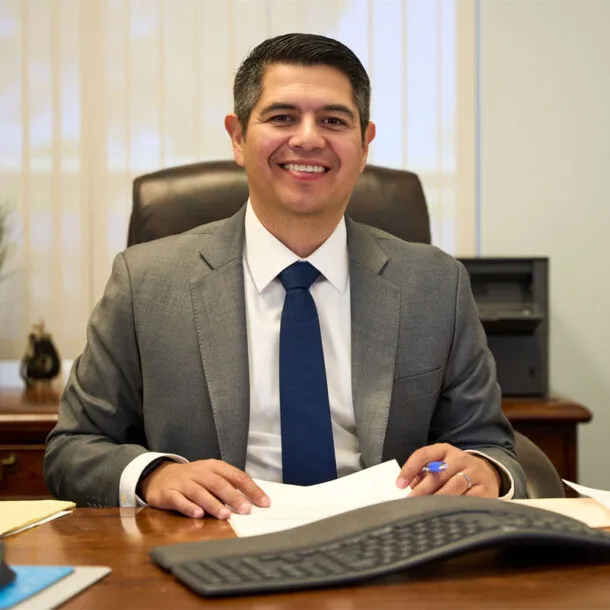
Founder · Super Lawyer 5×
Lawrence M. Ruiz, Esq.
Founder · Managing Attorney
Super Lawyer · Founder · Henderson PI
Serving Las Vegas, NV
Hit while walking in Las Vegas? Ruiz Law helps pedestrians with crosswalk, parking lot, rideshare, hit-and-run, and serious injury claims.
No attorney fee unless we recover money · Bilingual EN / ES
Attorney advertising. This information is not legal advice. No attorney fee unless we recover money for you; clients may be responsible for costs and opposing parties' fees as required by law. Past results do not guarantee future outcomes.
In short: If a vehicle hit you while walking in Las Vegas, the claim may involve crosswalk rules, parking-lot fault, a rideshare driver, or a hit-and-run. The Ruiz Law Firm helps pedestrians find the coverage that applies and preserve the evidence.
The Ruiz Law Firm represents people hit by vehicles while walking in Las Vegas, from the first call through settlement or trial. We work to prove the driver was at fault, deal with the insurance company so you do not have to, and pursue compensation for your medical bills, lost income, and pain. We work on contingency, which means there is no attorney fee unless we recover money for you.
If you or a family member was hurt on foot, you can request a free consultation or call (725) 485-3301. Attorney Lawrence Ruiz and our team handle pedestrian injury claims across Las Vegas, Henderson, Summerlin, and Clark County.
Pedestrian accidents in Las Vegas often happen where vehicles and people are forced into the same crowded spaces: crosswalks, casino entrances, parking garages, rideshare zones, bus stops, apartment complexes, shopping centers, and wide surface streets. Even a low-speed impact can cause serious injuries when a person on foot has no frame, seat belt, or airbag.
The Ruiz Law Firm helps injured pedestrians evaluate fault, preserve video, document injuries, and identify available insurance coverage. For the broader Nevada overview, see our canonical Las Vegas pedestrian accident lawyer page, which includes the full right-of-way statute table.
Where you were hit often shapes who is at fault and which insurance applies. These are the patterns we see most in the valley.
The Strip is one of the busiest pedestrian environments in the country, and that density drives a distinct set of crashes. Valet lanes, rideshare and taxi pickup zones, hotel driveways, and crowded nightlife crossings put people on foot next to drivers who are turning, stopping, or pulling out, many of them out-of-town visitors using navigation in unfamiliar traffic. Pedestrian bridges exist for a reason on the Strip, and a driver who hits someone in a marked crossing or a resort driveway is frequently at fault.
An unmarked crosswalk exists at virtually every Nevada intersection, even where no lines are painted. Drivers generally must yield to a pedestrian crossing there just as they would in a painted, marked crosswalk. Insurers often try to blur this line by suggesting that "no lines" means "no crosswalk," but that is not how Nevada treats an intersection crossing.
Many Las Vegas pedestrian crashes happen at low speed in parking lots, parking garages, valet lanes, and resort driveways, where drivers are backing up, turning, or watching for other cars instead of people on foot. Low speed does not mean minor injury, and these claims often involve more than one possible insurance policy.
Southern Nevada's wide, high-speed arterials see a high share of hit-and-run pedestrian crashes, often at night. When a driver flees, identifying the vehicle quickly matters, and so does reviewing the injured person's own coverage, because that is frequently the policy that ends up paying.
In most pedestrian cases, the driver has the duty to yield. Nevada law requires a driver to slow down or stop and yield to a pedestrian crossing within a crosswalk when no traffic signal controls that spot (NRS 484B.283), and that duty applies to the unmarked crosswalks at intersections, not just painted ones.
The rule is not unconditional. A pedestrian crossing outside a crosswalk, or crossing mid-block between intersections, generally must yield the right of way to traffic on the road (NRS 484B.287). A pedestrian also may not suddenly leave a curb and walk into the path of a vehicle that is so close the driver cannot reasonably stop. That is why fault in a crosswalk case often turns on exactly where the crossing happened and whether the driver had time to react.
For the full right-of-way breakdown, including a statute-by-scenario table, see the canonical Las Vegas pedestrian accident lawyer page.
You can often still recover. Nevada uses modified comparative negligence with a 51% bar (NRS 41.141), which means you can recover as long as you were not more than 50% at fault, with your award reduced by your share. Crossing outside a crosswalk does not automatically end your claim.
A driver who was speeding, distracted, or impaired can bear most of the fault even when the pedestrian was not in a marked crosswalk. Insurers know this, which is why they work to inflate a pedestrian's share of blame using crossing location, signal timing, clothing color, or visibility. Those arguments should be tested against the scene and the evidence, not accepted at face value.
When the driver flees or has no insurance, the injured pedestrian's own coverage often becomes the claim that actually pays. Uninsured/underinsured motorist (UM/UIM) coverage, and sometimes a household auto policy, can apply even though you were on foot rather than behind the wheel.
This matters because Nevada only requires drivers to carry minimum liability limits of 25,000 dollars per person and 50,000 dollars per accident, and a serious pedestrian injury can exhaust those limits quickly. A hit-and-run or uninsured driver leaves a gap that UM/UIM coverage is designed to fill, so reviewing your own policy early is one of the first things we do.
The table below maps common Las Vegas pedestrian scenarios to the insurance source most likely to apply. These are general possibilities, not guarantees; the policies that actually cover your claim depend on the facts.
| Crash scenario | Insurance source that may apply |
|---|---|
| A driver fails to yield in a crosswalk or driveway | The at-fault driver's auto liability policy may apply |
| The driver was working for a rideshare, delivery, or commercial employer | A commercial or rideshare policy may apply on top of, or instead of, the personal policy |
| The driver flees (hit-and-run) or has no insurance | The pedestrian's own uninsured motorist (UM) coverage, and sometimes a household auto policy, may apply |
| The driver carries only Nevada's minimum limits and they run out | The pedestrian's underinsured motorist (UIM) coverage may make up the gap |
| Early medical bills before fault is sorted out | Medical payments (MedPay) coverage, if the household carries it, may apply regardless of fault |
Reviewing every policy that may apply, including your own, keeps the claim from being limited by the first insurer's answer.
Las Vegas pedestrian crashes often happen near places with cameras: hotels, casinos, apartment complexes, gas stations, restaurants, retail centers, parking garages, buses, rideshare pickup zones, and traffic corridors. Video can answer questions about signal timing, vehicle speed, lane position, driver attention, and where the pedestrian was walking.
Scene details also matter. Lighting, lane markings, sight lines, signs, construction barriers, driveway layout, and parked vehicles can all affect fault. Surveillance footage may exist for only a limited time, so targeted preservation requests often need to go out quickly. Southern Nevada's wide arterials and dense resort traffic make it one of the riskiest places in the country to be on foot, and most of Nevada's pedestrian deaths happen in Clark County. That risk is part of why moving fast on evidence can matter so much.
Get medical care, save the report number, photograph visible injuries, keep clothing and damaged personal items, write down witness names, and save every insurer letter. If you remember nearby businesses or cameras, note them quickly. Those details can help an attorney send targeted preservation requests before footage is overwritten.
Usually the driver. Nevada law requires a driver to slow down or stop and yield to a pedestrian crossing within a crosswalk when no traffic signal controls that spot (NRS 484B.283), and that includes the unmarked crosswalks that exist at virtually every intersection. A driver who fails to yield is normally at fault. Fault can be shared if the pedestrian left a curb so suddenly the driver had no chance to stop, so the scene and evidence still matter.
Often, yes. Crossing outside a crosswalk does not automatically end your claim. Nevada uses modified comparative negligence with a 51% bar (NRS 41.141), so you can recover as long as you were not more than 50% at fault, with your award reduced by your share. A driver who was speeding, distracted, or impaired can still bear most of the fault even if you were not in a marked crosswalk.
You may still have a claim. When a driver flees a hit-and-run or carries no insurance, your own uninsured/underinsured motorist (UM/UIM) coverage, and sometimes a household auto policy, can apply even though you were on foot. Nevada only requires drivers to carry minimum liability limits of 25,000 dollars per person and 50,000 dollars per accident, and a hit-and-run or uninsured driver leaves a gap that UM/UIM coverage is designed to fill, so reviewing your own policy early is important.
In Nevada the general deadline to file a personal injury claim is two years from the date of the crash (NRS 11.190(4)(e)). Missing that deadline usually means losing the right to recover, and some situations involve shorter notice issues, for example when a government vehicle or public roadway condition is involved, so it is best to speak with an attorney soon after a pedestrian crash.
Many Las Vegas pedestrian crashes happen at low speed in parking lots, garages, valet lanes, and resort driveways, where drivers are turning, backing up, or watching for other cars instead of people on foot. These claims often involve the driver's auto insurance plus possible coverage tied to the property, or a commercial or rideshare policy if the driver was working. We review every available policy so the claim is not limited by the first insurer's answer.
Southern Nevada's wide arterials and dense resort traffic make it one of the riskiest places in the country to be on foot. Of the 113 pedestrian deaths reported in Nevada in 2024, 96 were in Clark County, according to the Governors Highway Safety Association's Pedestrian Traffic Fatalities 2024 preliminary data. That risk is why preserving video and scene evidence quickly can matter so much after a pedestrian crash.
Call (725) 485-3301 or request a free consultation. You can also schedule a free consultation through our online form. There is no attorney fee unless we recover money for you.
Car, truck, slip-and-fall, dog bite, and workplace injury cases across Henderson, Las Vegas, and surrounding areas. Past results do not guarantee future outcomes.
Free Consultation →Missed work, medical bills, your family. We carry the legal weight so you can focus on recovering.
Super Lawyer · Founder · Henderson PI

$1M+ pre-suit settlements · Lifelong Nevadan

Workers' comp lead · 14+ years in Nevada
Trusted by our clients.
“After my accident I didn't know how I was going to pay my bills. Ruiz Law helped me understand the process from the start.”
“Lawrence made me feel like I really mattered. I didn't expect that from a lawyer — and it makes a huge difference.”
“Lawrence took my truck-accident case seriously from day one. Words can't express how thankful I am.”
+3 more verified reviews
Every case is different. Prior results and testimonials do not guarantee, predict, or warrant a similar outcome.
Call the 24-hour intake line or request a case review online anytime. No legal jargon — just the facts, in English or Spanish.

A Ruiz attorney — not a screener — aims to review new injury matters promptly and explain your next steps.

On that call we discuss whether the firm may be able to help, what factors affect value, and whether a lawyer is likely needed.
In-House Languages
Consulta gratis. No paga honorarios de abogado a menos que recuperemos dinero.
Nevada's statute of limitations for personal injury is generally two years from the date of the accident under NRS 11.190(4)(e). Some cases can involve shorter notice issues, especially when a government vehicle or public property condition is involved, so early review matters.
Yes, if you were not more than 50 percent at fault. Nevada uses modified comparative negligence. Your recovery can be reduced by your percentage of fault, and insurers often try to blame pedestrians for crossing location, signal timing, clothing, or visibility.
Uninsured or underinsured motorist coverage may apply depending on the policies available to you or your household. We review the driver's policy, your own coverage, rideshare or commercial coverage, and any other realistic source of recovery.
A pedestrian accident claim may include emergency care, surgery, rehabilitation, future medical needs, lost income, reduced earning capacity, pain, physical limitations, and other losses tied to the injury.
Call 911, get medical care, preserve photos and witness information if possible, save the report number, and avoid recorded statements until you understand your rights. Surveillance footage from nearby businesses, hotels, apartments, buses, or intersections may need to be requested quickly.
Under Nevada law, drivers must slow down or stop to yield to a pedestrian crossing within a crosswalk when no traffic signal controls the spot (NRS 484B.283), and this applies to unmarked crosswalks at intersections as well as marked ones. A driver who fails to yield is usually at fault. Fault can be shared, though, if the pedestrian left a curb so suddenly that the driver had no chance to stop, so the facts and evidence matter.
Yes. In Nevada an unmarked crosswalk exists at virtually every intersection, even without painted lines, and drivers generally must yield to pedestrians crossing there just as they would in a marked crosswalk (NRS 484B.283). Outside of a crosswalk, however, a pedestrian crossing mid-block must yield to traffic (NRS 484B.287). Where the crossing happened is often the first thing an insurer investigates.
Often, yes. Crossing outside a crosswalk does not automatically end your claim. Nevada uses modified comparative negligence with a 51 percent bar (NRS 41.141), so you can recover as long as you were not more than 50 percent at fault, with your award reduced by your share. A driver who was speeding, distracted, or impaired can still bear most of the fault even if you were not in a crosswalk.
Many pedestrian crashes happen at low speed in parking lots, garages, valet lanes, and resort driveways, where drivers are turning, backing up, or watching for other cars instead of people on foot. These claims often involve the driver's auto insurance plus possible coverage tied to the property or, if the driver was working, a commercial or rideshare policy. We review every available policy so the claim is not limited by the first insurer's answer.
Call (725) 485-3301 — no pressure for the first 10 minutes.
Free consultation. No hourly fees. No upfront attorney fee. No attorney fee unless we recover money for you.
Personal injury help in Henderson, Las Vegas, and surrounding areas.