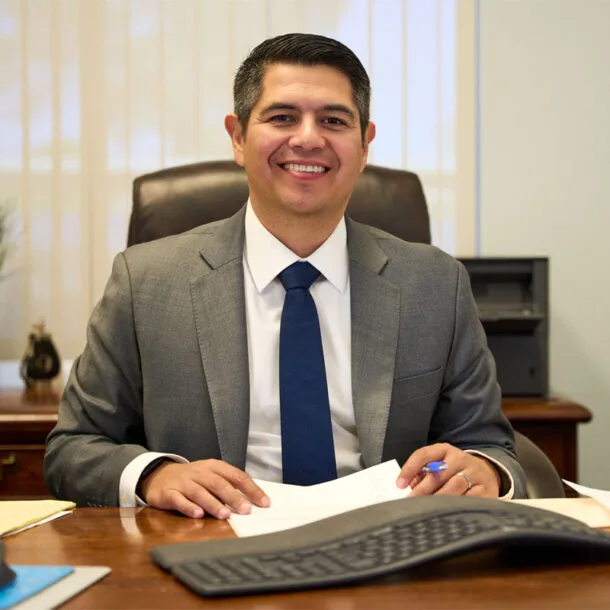
Serving Phoenix from our Tempe office
Phoenix Pedestrian Accident Lawyer
Hit while walking in Phoenix? Ruiz Law represents pedestrians from our Tempe office at 222 S Mill Ave Ste 800. Call (725) 485-3301.
222 S Mill Ave Ste 800, Tempe, AZ 85281
No attorney fee unless we recover money for you. Past results do not guarantee future outcomes.
Attorney advertising. This information is not legal advice. No attorney fee unless we recover money for you; clients may be responsible for costs and opposing parties' fees as required by law. Past results do not guarantee future outcomes.
Phoenix Pedestrian Accident Lawyer
In short: Hit by a vehicle while walking in Phoenix? The Ruiz Law Firm represents injured pedestrians from our Tempe office at 222 S Mill Ave Ste 800, Tempe, AZ 85281 — we do not have a Phoenix office. Free consultation. No attorney fee unless we recover money for you. Call (725) 485-3301 or request a callback.
Serving Phoenix from our Tempe office
The Arizona office is 222 S Mill Ave Ste 800, Tempe, AZ 85281. We serve Phoenix pedestrians from that Tempe address. There is no Phoenix street office on this page, and this page does not claim a Phoenix Google Business Profile.
Attorney Lawrence Ruiz is admitted in Arizona. Confirm current status in the State Bar of Arizona member directory. This page does not publish an Arizona bar number. Other Arizona pages live on the Arizona hub.
Call (725) 485-3301. There is no Arizona-only phone on file. This page does not list Tempe office hours.
Phoenix crash volume — and what ADOT does not break out by city
Phoenix is a high-volume crash city. ADOT's 2024 Motor Vehicle Crash Facts jurisdiction table counts 37,472 Phoenix crashes, 265 fatal crashes, 278 people killed, and 15,057 injured. That city table has no pedestrian column. This page therefore does not invent a Phoenix-only pedestrian death count.
Statewide, the same Crash Facts summary recorded 2,079 pedestrian crashes and 263 pedestrians killed in 2024, with the peak hour 6 p.m. to 7 p.m. Maricopa County's pedestrian table shows 1,516 crashes, 158 killed, and 1,425 injured. Maricopa and Pima Counties together accounted for 79.85% of statewide pedestrian fatalities.
Those figures come from ADOT Crash Facts and the 2024 Crash Facts PDF. They are area context for people on foot in the Valley, not a substitute for the police report from your crossing.
Indian School HAWKs and Phoenix High Injury Network crossings
Phoenix pedestrian risk is not a generic "busy street" story. The City's 2024 Road Safety Action Plan (RSAP) annual update lists HAWK beacons on Indian School Road between 24th and 32nd Streets and between 36th and 44th Streets as pedestrian treatments. A HAWK is a pedestrian-activated beacon. It is a city safety treatment, not a promise that drivers will stop.
Phoenix's High Injury Network (HIN) GIS for 2018–2022 killed-or-serious-injury (KSI) locations includes crossings and segments that keep showing up for people on foot:
- Camelback Road and 27th Avenue (10 KSI)
- 67th Avenue and Thomas Road (10 KSI)
- 51st Avenue from Roosevelt to McDowell (11 KSI)
- McDowell Road from 24th to 28th Streets (9 KSI)
HIN source: Phoenix STR_RoadSafety_2024 MapServer. RSAP source: PHX RSAP 2024 annual report.
A left-turning driver hunting a gap on Indian School, a through driver overtaking a car already stopped at a HAWK, or a nighttime crossing on McDowell is a different fact pattern than a freeway merge. Fault still turns on the Arizona statutes below and on the evidence from that crossing — signal phase, lighting, speed, and where each person was standing when the vehicle arrived.
Who must yield at a Phoenix crosswalk
Arizona pedestrian duties live in Title 28. They are not Nevada's crossing statutes.
Drivers at a crosswalk when signals are not running — A.R.S. § 28-792:
A. Except as provided in section 28-793, subsection B, if traffic control signals are not in place or are not in operation, the driver of a vehicle shall yield the right-of-way, slowing down or stopping if need be in order to yield, to a pedestrian crossing the roadway within a crosswalk when the pedestrian is on the half of the roadway on which the vehicle is traveling or when the pedestrian is approaching so closely from the opposite half of the roadway as to be in danger. A pedestrian shall not suddenly leave any curb or other place of safety and walk or run into the path of a vehicle that is so close that it is impossible for the driver to yield.
Subsection B adds that a driver shall not overtake a vehicle stopped at a crosswalk to permit a pedestrian to cross. That matters on Indian School and other arterials where a first car stops at a HAWK or painted crossing and a second car tries to pass.
Due care to every pedestrian on the roadway — A.R.S. § 28-794:
Notwithstanding the provisions of this chapter every driver of a vehicle shall:
- Exercise due care to avoid colliding with any pedestrian on any roadway.
- Give warning by sounding the horn when necessary.
- Exercise proper precaution on observing a child or a confused or incapacitated person on a roadway.
Where pedestrians walk when sidewalks exist — A.R.S. § 28-796:
A. If sidewalks are provided, a pedestrian shall not walk along and on an adjacent roadway. B. If sidewalks are not provided, a pedestrian walking along and on a highway shall walk when practicable only on the left side of the roadway or its shoulder facing traffic that may approach from the opposite direction.
Insurers often argue that the pedestrian left the curb too late, crossed mid-block, wore dark clothing, or should have used a different opening. Those arguments have to be matched to § 28-792's "suddenly leave" clause, the location of the crosswalk, HAWK or signal timing, lighting, and speed. Walking outside a painted crosswalk does not, by itself, end an Arizona claim.
Two-year deadline and Arizona comparative fault
Limitations — A.R.S. § 12-542:
Except as provided in section 12-551 there shall be commenced and prosecuted within two years after the cause of action accrues, and not afterward, the following actions:
- For injuries done to the person of another including causes of action for medical malpractice as defined in section 12-561.
- For injuries done to the person of another when death ensues from such injuries, which action shall be considered as accruing at the death of the party injured.
Pure comparative fault — A.R.S. § 12-2505:
A. The defense of contributory negligence or of assumption of risk is in all cases a question of fact and shall at all times be left to the jury. If the jury applies either defense, the claimant's action is not barred, but the full damages shall be reduced in proportion to the relative degree of the claimant's fault which is a proximate cause of the injury or death, if any. There is no right to comparative negligence in favor of any claimant who has intentionally, wilfully or wantonly caused or contributed to the injury or wrongful death.
If a City of Phoenix vehicle, a public employee, or a public roadway condition may be involved, Arizona also has a 180-day notice of claim under A.R.S. § 12-821.01 and a one-year suit deadline under A.R.S. § 12-821. That is a caution, not a diagnosis of your case.
Trauma hospitals in Phoenix
Phoenix pedestrians are often taken to a Level I trauma center. The hospitals below appear on the Arizona designated trauma centers list. The Ruiz Law Firm does not have a hospital affiliation.
- Banner – University Medical Center Phoenix, 1111 E McDowell Rd (Banner)
- St. Joseph's Hospital and Medical Center, 350 W Thomas Rd (Dignity Health)
- Valleywise Health Medical Center, 2601 E Roosevelt St (trauma)
- Phoenix Children's Hospital, 1919 E Thomas Rd (Level I pediatric)
Keep imaging, discharge papers, and follow-up referrals. Pedestrian injuries can look minor in the first hour and still include fractures, brain injury, or internal injury once swelling and scans catch up.
Where a Phoenix pedestrian lawsuit is filed
Civil injury claims of $10,000 or more go to Maricopa County Superior Court, not Justice Court (lawsuit guide). The downtown complex is 201 W Jefferson St, Phoenix, AZ 85003 (Clerk Central Court Complex). Civil hearings are heard downtown even if papers are dropped at another counter (CVC1). Cover types include 101 (injury) and 103 (death). That courthouse address is the court, not a Ruiz Phoenix office.
Evidence that actually moves a pedestrian claim
Insurance companies often argue crossing location, signal timing, clothing, or visibility. Those arguments need evidence, not a guess:
- Police reports and any body-camera or dash-camera references
- HAWK or traffic-signal timing and intersection layout
- Photos of lighting, sight lines, signs, lane markings, and vehicle damage
- Surveillance from businesses, apartments, buses, or nearby cameras
- Witness names and contact information
- Medical records connecting the impact to the injury
- Phone, delivery, or employer records when a working driver is involved
Request video quickly. Intersection systems and store cameras overwrite.
A pedestrian claim may involve more than the driver's personal auto policy. If the driver was working, delivering, or logged into a rideshare network, additional coverage questions can exist. If the driver fled or carried too little insurance, uninsured or underinsured motorist coverage available to the injured person or household may matter. This page does not quote Arizona minimum liability limits that are not in the source packet. The first insurer's answer is not always the last policy that applies.
Nevada counterpart and this Arizona page
Arizona law governs a Phoenix crossing. If you were hurt walking in Southern Nevada, see our Las Vegas pedestrian accident lawyer page. Nevada uses modified comparative negligence with a 51 percent bar (NRS 41.141). Arizona § 12-2505 is pure comparative: sharing fault reduces damages; it does not bar the claim unless the claimant intentionally, wilfully, or wantonly caused or contributed to the injury. Do not mix the two systems.
Talk with a Phoenix pedestrian accident lawyer
If you were hit while walking in Phoenix, call (725) 485-3301 or request a free consultation. We serve Phoenix from 222 S Mill Ave Ste 800, Tempe, AZ 85281. There is no attorney fee unless we recover money for you. Past results do not guarantee future outcomes. More Arizona pages are on the Arizona hub.
Arizona pedestrian accident FAQs
Arizona generally requires personal-injury actions within two years after the cause of action accrues under A.R.S. § 12-542. If death ensues from the injuries, that two-year clock is considered as accruing at the death of the injured person. Claims involving a public entity or public employee can have a 180-day notice deadline (A.R.S. § 12-821.01) and a one-year suit deadline (A.R.S. § 12-821).
Usually yes. Arizona uses pure comparative fault under A.R.S. § 12-2505. Contributory negligence and assumption of risk are jury questions. If the jury applies either defense, the claim is not barred; damages are reduced in proportion to the claimant's fault that was a proximate cause of the injury or death. There is no comparative-negligence right for a claimant who intentionally, willfully, or wantonly caused or contributed to the injury or death.
When traffic signals are not in place or not in operation, A.R.S. § 28-792 requires a driver to yield the right-of-way, slowing or stopping if needed, to a pedestrian crossing in a crosswalk on the driver's half of the roadway or approaching so closely from the other half as to be in danger. A pedestrian must not suddenly leave a curb or other place of safety into the path of a vehicle that cannot yield. A driver also must not overtake a vehicle stopped at a crosswalk to let a pedestrian cross.
A marked-crosswalk fact pattern is not required to keep an Arizona claim alive. A.R.S. § 28-794 requires every driver to exercise due care to avoid colliding with any pedestrian on any roadway, to sound the horn when necessary, and to take proper precaution around a child or a confused or incapacitated person. A.R.S. § 12-2505 can reduce damages for shared fault; it does not automatically bar the claim because the crossing was unmarked or mid-block.
Arizona imposes shorter public-entity deadlines: a notice of claim within 180 days after accrual (A.R.S. § 12-821.01) and a lawsuit against a public entity or public employee within one year (A.R.S. § 12-821). Those statutes apply when a city, county, state, or public employee may be involved. They are a caution, not a diagnosis of any reader's case.
No. The Ruiz Law Firm serves Phoenix from the Tempe office at 222 S Mill Ave Ste 800, Tempe, AZ 85281. There is no Phoenix street address for this firm. Call (725) 485-3301 or request a callback. Other Arizona pages are listed on the Arizona hub.
Civil injury claims of $10,000 or more are filed in Maricopa County Superior Court. The downtown complex is 201 W Jefferson St, Phoenix, AZ 85003. Civil hearings are heard downtown even if forms are dropped at another counter. Cover types include 101 (injury) and 103 (death). That courthouse address is not a Ruiz Phoenix office.
Call 911, get medical care, and keep the report number. Photograph lighting, markings, the vehicle, and injuries if you can. Save witness names. Nearby cameras and HAWK or signal timing often overwrite quickly. Avoid recorded statements until you understand Arizona's two-year clock and comparative-fault rule. Call (725) 485-3301 or request a callback from the Tempe office.
Call (725) 485-3301 — no pressure for the first 10 minutes.

Free consultation. No hourly fees. No upfront attorney fee. No attorney fee unless we recover money for you.
- 10-minute triage call with a real attorney
- Custom document inventory
- Treatment-resource discussion when appropriate
- Adjuster-contact guidance